Description
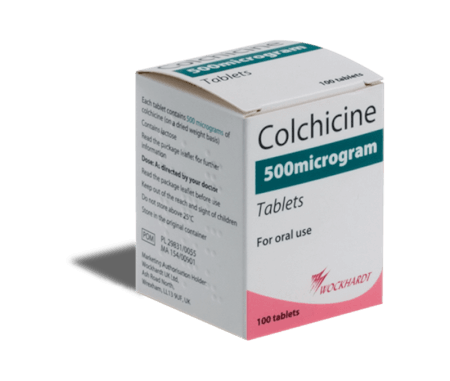
Colchicine is used to treat acute attacks of gout, and to prevent attacks during the first months of urate-lowering treatment. It reduces the inflammation that uric acid crystals cause in a joint, so it is not a painkiller in the ordinary sense. Colchicine has a narrow margin between a helpful dose and a harmful one, so the dose and the maximum for a course must be followed exactly, and a course is not repeated too soon; your prescriber will tell you both.
Diarrhoea, nausea, vomiting and abdominal pain are signs to stop taking it and seek advice. More serious toxicity can affect the blood, the muscles and the nerves. The dose is reduced in kidney or liver impairment. Tell your prescriber about clarithromycin, erythromycin, ciclosporin, verapamil, diltiazem, a statin or an antifungal, all of which can raise colchicine levels.
Keep the tablets well out of the reach of children, because overdose is dangerous.
- For acute gout attacks and for cover when urate-lowering starts
- Reduces the inflammation caused by uric acid crystals
- 500 microgram tablets; follow the dose and course limit exactly
- Stop and seek advice if diarrhoea, vomiting or abdominal pain occur
- Dose is reduced in kidney or liver impairment
- Interacts with clarithromycin, ciclosporin, verapamil and statins